
Home Lifts for Landed Homes: A Guide
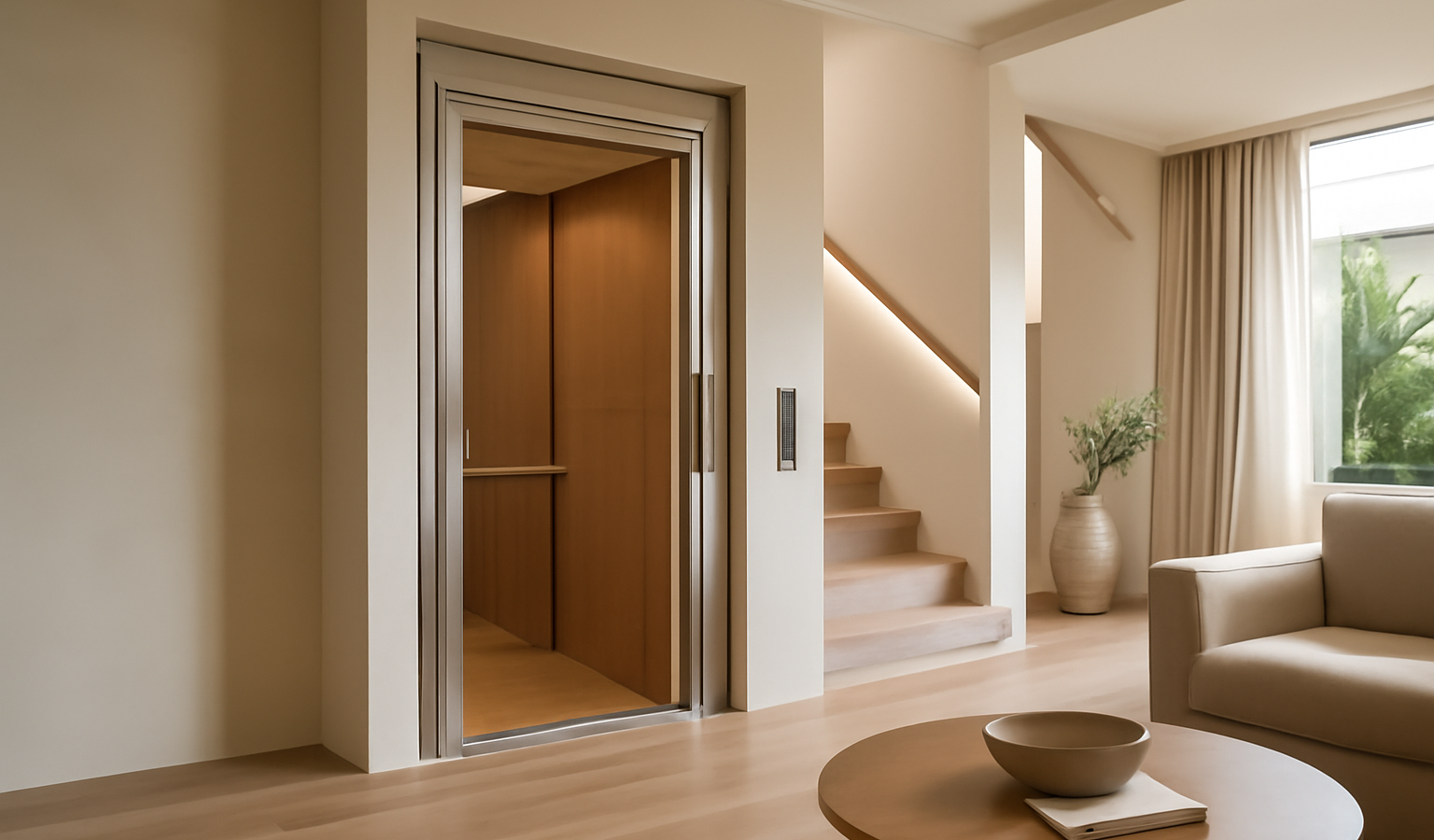
As multi-storey landed homes become the norm and households plan for ageing in place, the home lift has shifted from luxury to a practical long-term investment. Choosing and planning a home lift in Singapore involves decisions about lift type, shaft space, approvals and ongoing maintenance that are far easier to get right at the design stage than to retrofit later. This guide walks through what landed homeowners need to know.
Why a home lift makes sense in a landed home
Singapore landed homes commonly span three or four storeys, which becomes harder to live with as families age or carry young children, groceries and luggage up and down daily. A lift future-proofs the home, supports ageing in place, and can add to the property’s appeal. It is most cost-effective to plan during a new build or a major addition and alteration, when the shaft can be designed in rather than carved out afterwards.
Integrating the lift into the overall layout is part of considered space planning, since its position affects circulation on every floor.
Types of home lift
| Type | How it works | Notes |
|---|---|---|
| Traction (cable) | Counterweight and cables | Smooth, energy-efficient, common choice |
| Hydraulic | Piston-driven | Robust, may need a machine space |
| Vacuum (pneumatic) | Air-pressure tube | Compact, no shaft pit, smaller capacity |
| Screw / platform | Screw-driven platform | Good for accessibility, slower |
Traction lifts are a popular all-round choice for landed homes. Vacuum lifts suit tight retrofits because they need minimal pit and headroom, though they carry fewer people. The right type depends on your space, capacity needs and budget.
Sizing and space requirements
A typical home lift cabin accommodates two to four people, with footprints often in the region of 1m by 1m up to 1.4m by 1.4m. You also need to allow for the shaft, a pit below the lowest landing and headroom above the top landing, though compact lifts reduce these. Plan a clear, sensible position that opens onto usable space on each floor, not a corridor dead end. Decide early whether you want the lift visible as a feature, perhaps with a glass shaft, or tucked discreetly into the plan.
Indicative cost ranges
Costs vary widely by type, capacity, finishes and the number of floors served. As an indicative guide for Singapore landed homes, a home lift commonly falls somewhere in the region of SGD 50,000 to SGD 120,000 or more, with premium finishes and additional stops pushing it higher. Treat these as rough planning figures only and get quotes specific to your design.
- Lift type and capacity are the biggest cost drivers.
- Number of floors served adds to the price.
- Cabin finishes and glass shafts add a premium.
- Building works for the shaft are a separate cost from the lift unit.
Approvals, safety and the qualified person
Home lifts in Singapore are regulated, and installation involves submissions and inspections. Lift works typically require a qualified person to handle approvals, and the installed lift must meet the relevant safety standards before it can be used. Your contractor and lift supplier should manage the BCA-related requirements and any addition and alteration approvals. Never treat a lift as a simple off-the-shelf fitting; the regulatory and safety side is integral.
Maintenance and running considerations
A home lift needs regular servicing by an authorised provider to stay safe and reliable, usually under a maintenance contract. Budget for this ongoing cost alongside the installation. Consider battery backup so the lift can return to a landing during a power cut, and choose a reputable supplier with good local service support, because parts and response times matter over the lift’s life.
The cheapest lift to buy can be the most expensive to own. Weigh the supplier’s local service network and maintenance terms as heavily as the upfront price.
Designing the lift into the home
A lift is a permanent architectural element, so its finishes and position should belong to the wider design. Planning it within a full-home design ensures the lift, stairs and circulation work together rather than competing. You can see how we integrate vertical circulation in our landed portfolio, and our notes on the landed master suite show how upper-floor living connects to the rest of the home.
FAQ
How much does a home lift cost in Singapore?
As an indicative range, a home lift for a landed property often falls between roughly SGD 50,000 and SGD 120,000 or more, depending on type, capacity, finishes and floors served. Building works for the shaft are a separate cost. Get quotes specific to your design.
Do I need approval to install a home lift?
Yes. Lift installation is regulated and typically requires a qualified person to handle submissions and inspections, and the lift must meet safety standards before use. Your supplier and contractor should manage these requirements.
What size space does a home lift need?
Cabins often range from about 1m by 1m to 1.4m by 1.4m for two to four people, plus space for the shaft, pit and headroom. Compact vacuum lifts reduce pit and headroom needs, which helps in retrofits.
Can I add a home lift to an existing landed house?
Yes, though retrofitting is more involved than designing one in from the start. Compact vacuum or platform lifts suit tight retrofits because they need minimal pit and headroom. A major addition and alteration is the ideal time to add one.
Considering a home lift as part of your landed home design? Get in touch with Elements and we will help you plan the position, type and finishes so the lift fits seamlessly into your home.